Water first
Protect watersheds, reduce leakage, reuse water, harvest rain, and desalinate only where the local balance supports it.
Systems for a liveable planet
Campaign 01 / OpenRegenerate the essentials
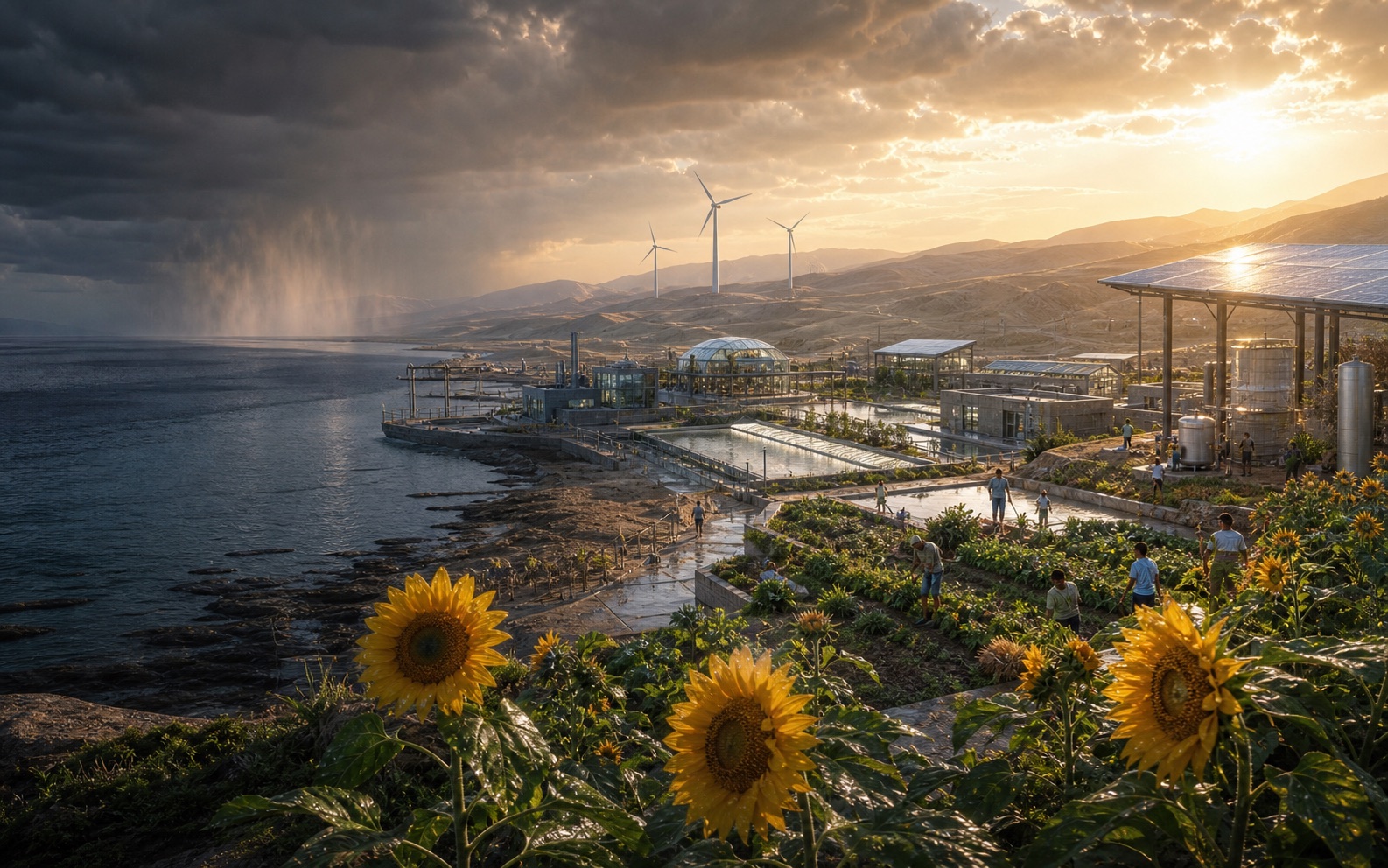
A world-saving programme for water, renewable power, targeted low-emissions hydrogen, resilient food systems, and dignified places—built one verified pilot at a time.
00 / Position
IUNUA does not promise to command the sky or solve humanity with one machine. It builds measurable local systems around the water we can protect, capture, clean, reuse—and the energy we can produce responsibly.
Hope, with guardrails.
Vision, with evidence.
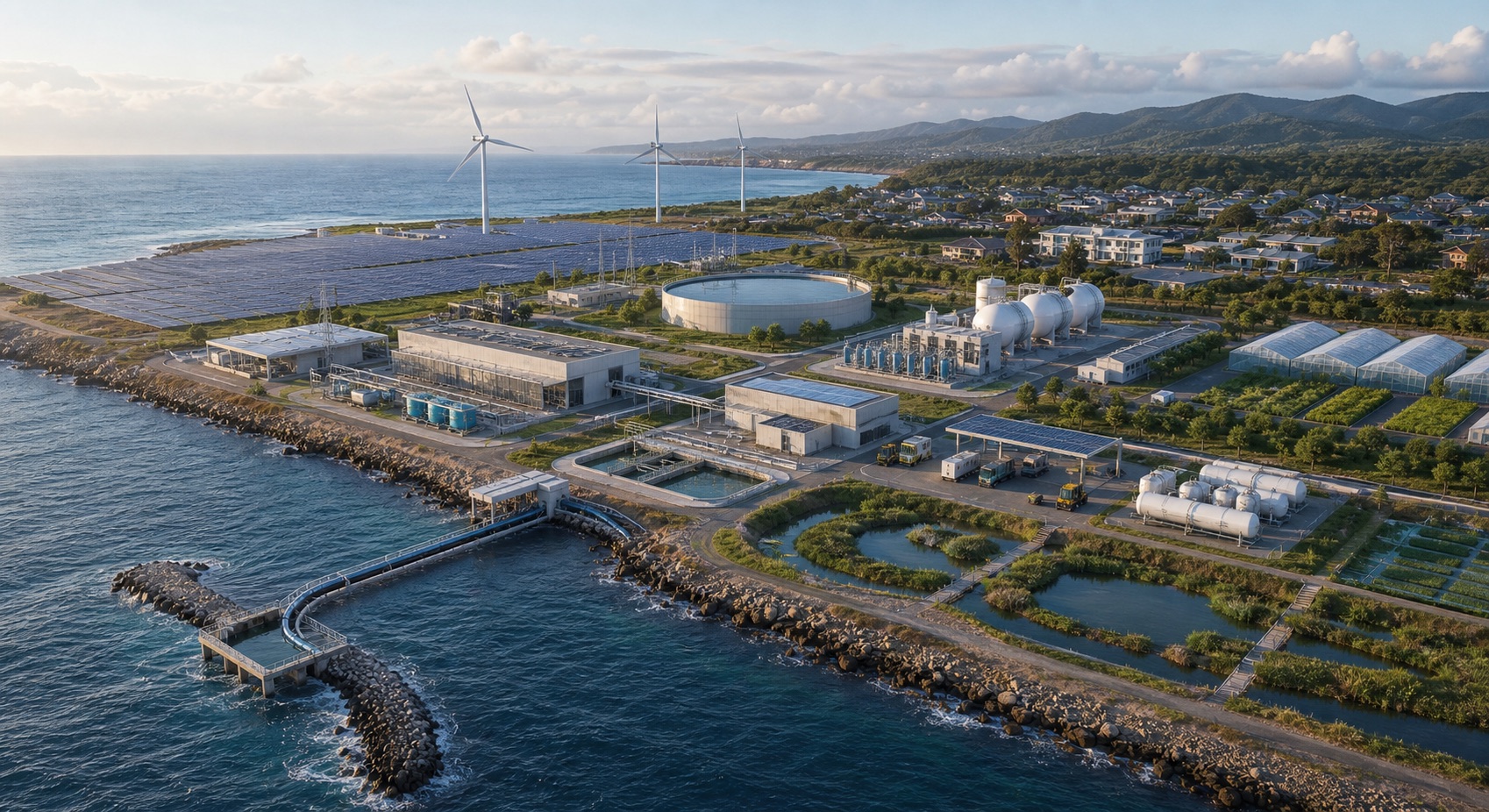
01 / The local loop
The loop starts with demand reduction and ecology—not with hydrogen. Each module earns its place through a local water and energy balance.
02 / Operating principles
No universal machine. No export-first water grab. No technology promoted beyond its evidence.
Protect watersheds, reduce leakage, reuse water, harvest rain, and desalinate only where the local balance supports it.
Use renewable electricity directly whenever practical. Batteries and grids serve short cycles more efficiently than converting power into gas and back.
Reserve low-emissions hydrogen for fertiliser, steel, selected fuels, strategic storage, and other uses that resist direct electrification.
Connect clean water and power to soil restoration, efficient irrigation, protected growing, cold chains, and local knowledge.
Provide privacy, choice, access, nature, meaningful work, public space, and real community participation—not only more units per hectare.
03 / Evidence ladder
Cloud seeding may influence precipitation in suitable existing clouds. It cannot create rain systems. Reliable cloud-scale rainfall enhancement by atmospheric ionisation has not been demonstrated.
Water conservation and reuse, reverse-osmosis desalination, solar and wind power, electrolysers, safe storage, and fuel cells for defined uses.
Fog harvesting, solar-thermal desalination, seasonal hydrogen storage, and cloud seeding only in suitable existing clouds with independent measurement.
Atmospheric ionisation for rainfall, large-scale direct seawater electrolysis, and airborne cities remain research or speculative concepts.
Renewable electricity → seawater pretreatment → reverse osmosis → final purification → electrolyser → storage or priority use. Direct untreated seawater electrolysis remains research.
Read the 2025 materials review04 / Concept observatory
All 31 images you supplied are now integrated, joined by three new IUNUA interpretations. The original art remains traceable; palette framing, cultural review, and technical maturity are labelled in HTML rather than hidden inside the pictures.
How to read the archive
Original exploration, palette-framed source, or a new text-free interpretation.
Established components, pilot candidate, active research, or speculative horizon.
Original labels and effects may describe unsupported or far-future systems. Weather intervention requires suitable existing atmospheric conditions and remains uncertain. Coastal hydrogen assumes desalination and purification before electrolysis. Flying cities, storm shields, direct untreated seawater electrolysis, and comparable systems are not presented as ready technologies.
05 / Continental pathways
Climate, ecology, culture, infrastructure, and community authority determine the sequence. A pilot must adapt; it must never arrive as a copy-paste megaproject.
Arid coastal corridors and fast-growing cities
Leak reduction + watershed protection
Solar and wind powered reverse osmosis
Clean water, cooling, food storage
Hydrogen near ports for fertiliser and industry
Protect coastal ecosystems, manage brine, and place community water security before exports.
06 / Design for dignity
Universe 25 was a mouse experiment—not a prediction about humanity. Its popular retelling cannot prove that abundance causes collapse or that more space alone prevents it.
The responsible lesson is a design question: do people have privacy, agency, belonging, meaningful roles, green and public space, mobility, and a voice in the systems around them?
Read Calhoun’s original 1973 paper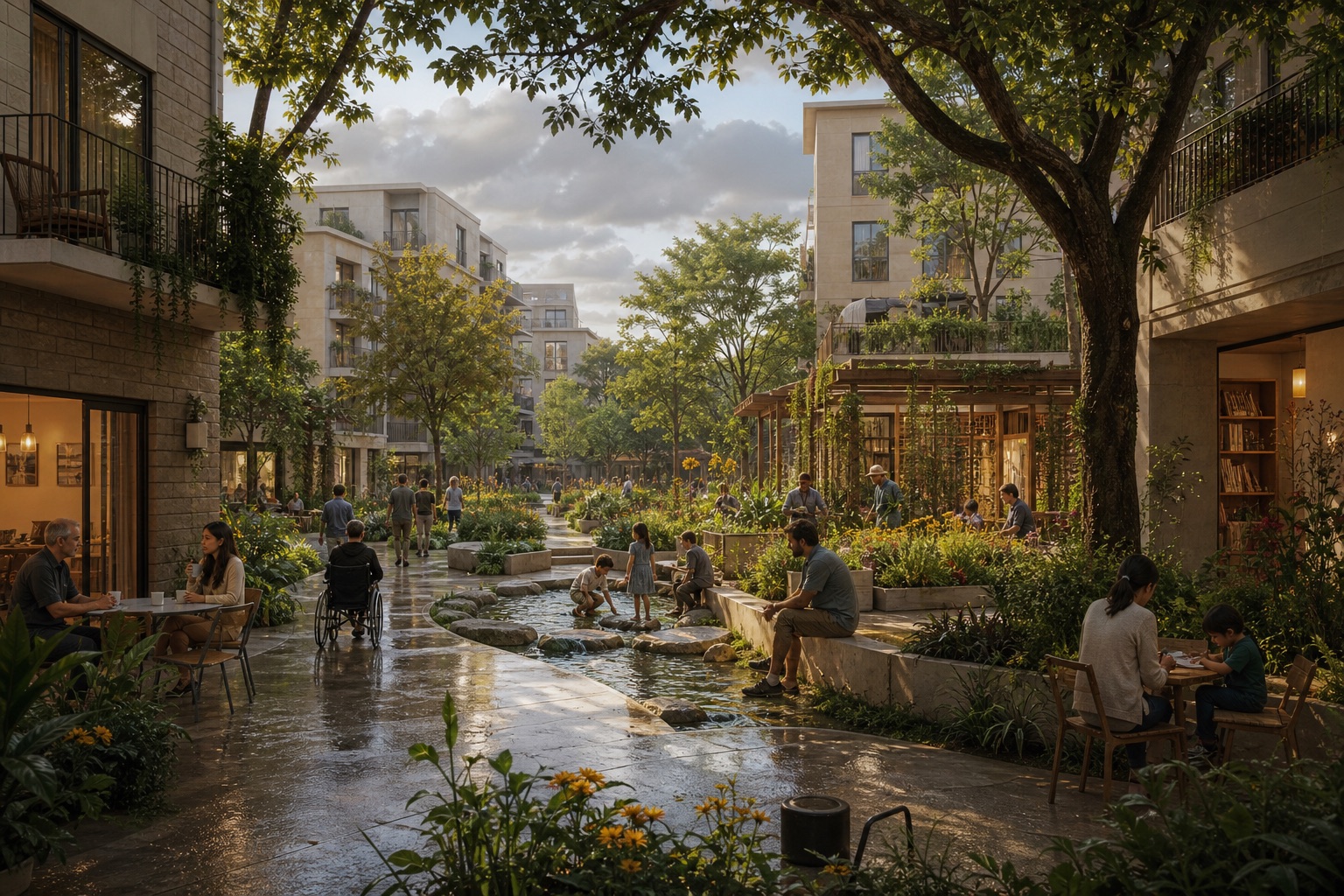
07 / Pilot protocol
Start with the community-defined need.
↓Publish the water, energy, carbon, food, and biodiversity baseline.
↓Choose the smallest proven system that can meet it.
↓Set independent metrics, stop criteria, permits, and safety review.
↓Measure publicly, learn locally, and share what failed.
✓Campaign action
08 / Evidence room
Primary and authoritative sources anchor the campaign. Every future pilot must publish its own engineering, environmental, water, safety, and community review.
Weather modification statement
↗02DOEWater use and electrolysis
↗03IPCCHydrogen and electrification
↗04IEAGlobal Hydrogen Review 2026
↗05FAOWater–energy–food nexus
↗06WHOHousing and health guidelines
↗07LSEHistory of the crowding experiments
↗IUNUA is a research and pilot programme. Images may depict future concepts. Results are site-dependent. Cloud seeding cannot create clouds and can only be studied or used under suitable meteorological conditions; atmospheric ionisation has not demonstrated reliable cloud-scale rain enhancement. Hydrogen is low-emissions only when its production and supply chain are demonstrably low-emissions. No single module guarantees rainfall, self-sufficiency, food security, or social stability. Every site requires independent engineering review, permits, environmental and water accounting, and meaningful community participation.